The question we get asked more than any other at The Functional Sip: is kava actually a real substitute for alcohol, or is it just wellness marketing? After extensive testing and research, here's our honest, science-backed answer.
How They Work: The Mechanism Difference
Alcohol (ethanol) works primarily by enhancing GABA activity in the brain — the neurotransmitter responsible for inhibition and calm. It also suppresses glutamate, an excitatory neurotransmitter. The result is relaxation, reduced inhibition, and at higher doses, impaired coordination and judgment.
Kava works through a related but distinct mechanism. The active compounds — kavalactones — also interact with GABA receptors, which is why the effects feel similar at a surface level: relaxation, reduced anxiety, social ease. However, kavalactones do not cause the same level of cognitive impairment as alcohol. You can drive after kava (though we always recommend caution). You maintain your judgment. You don't get the "drunk" feeling.
The Effects: Side by Side
| Effect | Alcohol (1-2 drinks) | Kava (1 can Botanical Brewing Co.) |
|---|---|---|
| Relaxation | ✓ Strong | ✓ Moderate-Strong |
| Social ease | ✓ Strong | ✓ Moderate-Strong |
| Mood elevation | ✓ Yes | ✓ Yes |
| Cognitive impairment | ✓ Yes | ✗ Minimal |
| Coordination impairment | ✓ Yes | ✗ No |
| Hangover | ✓ Yes | ✗ No |
| Calories | ~150 per drink | ~20-50 per can |
| Next-day anxiety ("hangxiety") | ✓ Common | ✗ No |
The Hangover Question
This is where kava wins decisively. Alcohol's hangover comes from acetaldehyde (a toxic metabolite), dehydration, sleep disruption, and next-day GABA rebound. Kava produces none of these. You wake up the next morning feeling exactly as you did before you drank. No headache, no nausea, no anxiety spike.
For anyone who has experienced "hangxiety" — the next-day anxiety that often follows alcohol consumption — this alone is a compelling reason to switch.
Social Use Cases: Where Kava Fits
Kava is not a 1:1 alcohol replacement in every situation. If you're looking to get drunk, kava won't do that. But for the most common reasons people drink socially — reducing anxiety, feeling more comfortable in conversation, unwinding after work — kava delivers comparable results without the downsides.
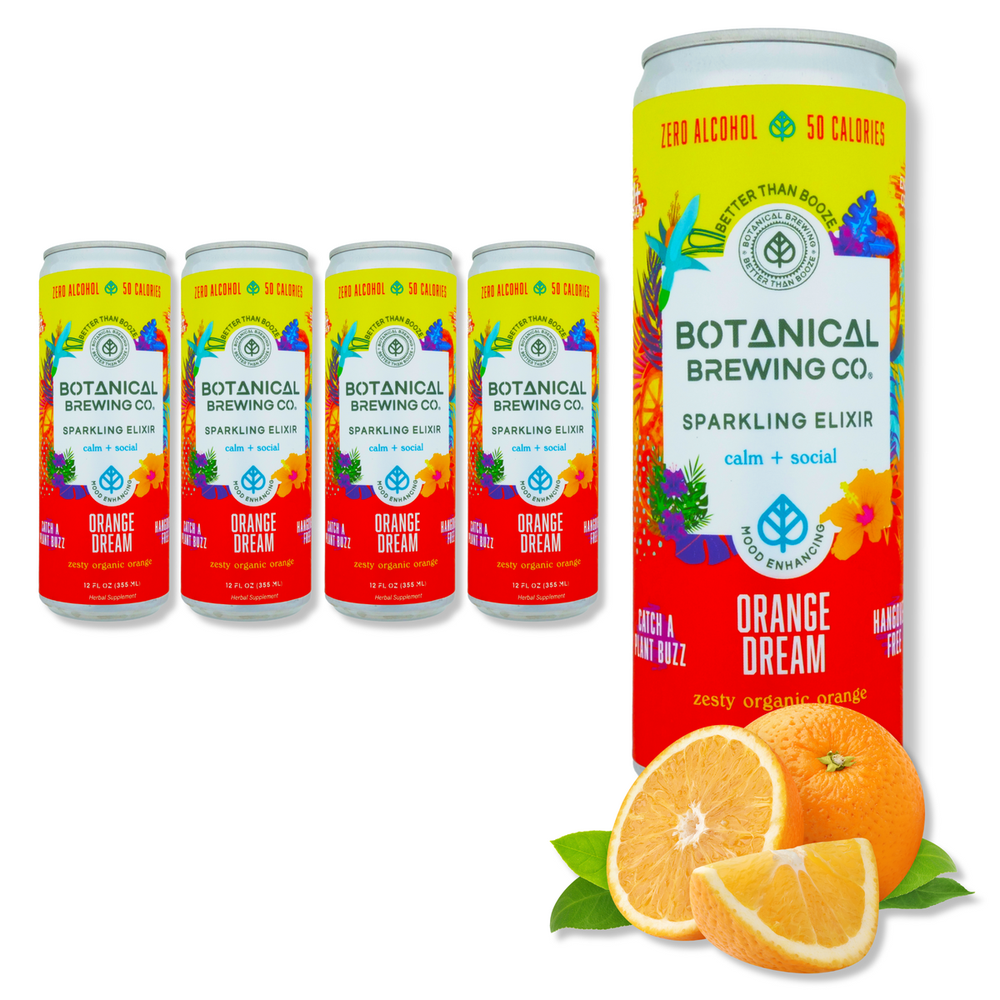
Botanical Brewing's ready-to-drink kava cans are specifically designed for this use case. One can delivers a noticeable, pleasant relaxation within 20-30 minutes that lasts 2-3 hours. It's the equivalent of a glass of wine in terms of social effect, without any of the cognitive impairment. Shop Botanical Brewing Kava →
Safety Considerations
Both kava and alcohol have safety considerations at high doses. Alcohol is well-documented as a liver toxin at chronic high doses. Kava has been associated with liver concerns in rare cases, primarily linked to non-noble kava varieties or products using kava stem and leaves rather than the root. High-quality RTD kava products from reputable brands like Botanical Brewing Co. use noble kava root only, which has a strong safety record.
The key takeaway: at normal social doses (1-3 cans), kava is significantly safer than the equivalent amount of alcohol.
The Bottom Line
For social relaxation, stress relief, and unwinding after work, kava is objectively the better choice for most people. The effects are real, the safety profile is superior, and the next morning is always clean. The only thing kava doesn't deliver is intoxication — and for most people reading this, that's actually the point.
These statements have not been evaluated by the FDA.

